
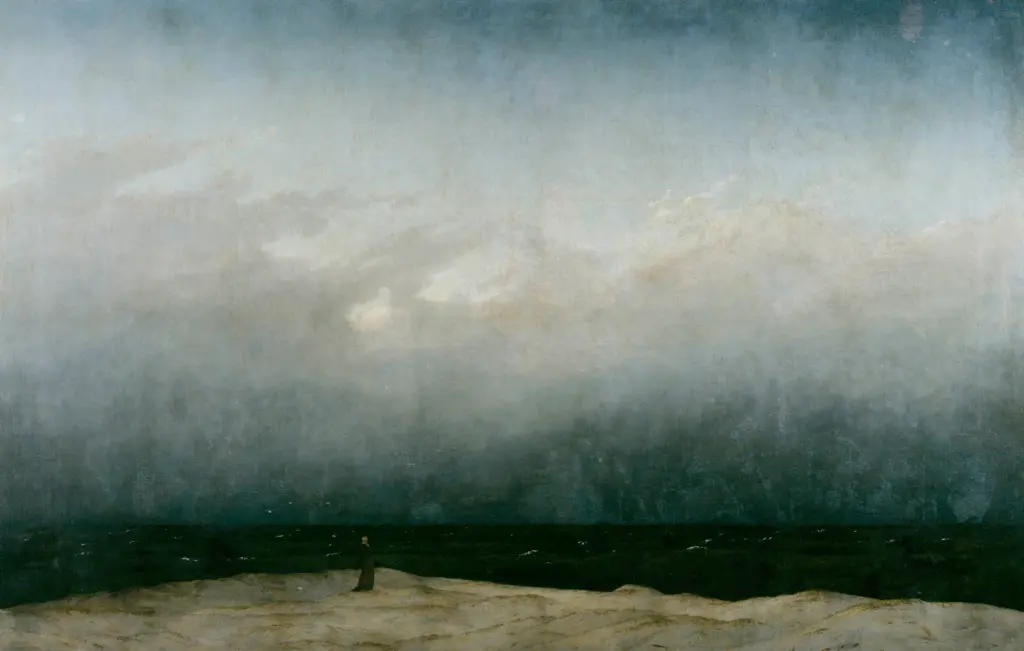
It was through the green valley and up a green hill,
Like one who was troubled in mind,
I called and shouted and played upon my pipe,
But no bonny boy could I find,
But no bonny boy could I find.
Roud Folk Song Index No. 293
To learn the old English and Scottish ballads, passed between singers, mostly orally, for generations, is to feel connected across the ages. The times may have changed, but the motifs and the expressions feel uncannily close to our own emotional lives.
The songs mourn for dead children, the folly of falling in love, the love impossible or denied. They speak of separation, and of times when losing someone might mean never seeing them ever again, with only a song to guide you.
In times long gone, there were simply fewer communication channels. Distances crossed could mean distances never returned. Contact was tenuous and much slower. Letters and messengers travelled, news passed through families and parishes. But contact was never guaranteed. A letter could be sent and you may never discover why it received no reply.
In the hyper-modern age, we have more contact than ever before. We can scroll timelines, re-read messages, see updates, visit websites, google. Even watching without speaking has acquired its own vocabulary, lurking, checking, stalking. In the day-to-day sessions I sit in, new discoveries about former partners and lost relationships are pored over.
Ironically perhaps this is why ‘no-contact‘ has become part of the lexicon of modern therapy. No contact, in the modern condition, is the act of deciding to never speak, or associate with someone again. There are thousands of videos in which self-help and therapy influencers advocate it. But ‘no contact’ does not mean no engagement or no knowledge. There are innumerable ways to engage with someone without being ‘in contact’. Perhaps that‘s why it‘s become such a modern fixation: we’re all in contact, all the time, whether we like it or not.
In the old ballads, you get a sense that the songs themselves helped the singer to hold onto absence, infusing it with personal meaning and melancholy. You could take a moment in your day, and tune your emotions through ancient human experiences. One song may be for one person, or simply express a feeling of the day. Songs could be passed down and sung together, a collective sharing of intimacy, revealing everything about the human condition without requiring anyone to reveal themselves. There need not be any announcement about the devastation of a break up, only a song sung with others.
But I wonder what has happened to our capacity to sit with real loss. We live with a kind of ghost contact, where one can look, check, and follow the digital trace without ever deeply experiencing the real unknowing of absence. What happens to the quiet dignity of longing when we have so many ways to fill this emptiness rather than honouring it? We can swipe for new partners, surveil social media, even create AI versions of people we have lost and bring them back to a kind of life. The emptiness fills with hope, interpretation, fantasy and information. We can maintain a pseudo-relationship with the object of loss without ever seeing or speaking to them again.
This is no trivial matter. Loss, separation and heartbreak run through some of our oldest stories, and indeed through almost every therapy session, as does the strange human capacity to continue longing for what cannot be possessed. For the medieval Christian mystics, longing was part of theology. The fourteenth-century English mystic Julian of Norwich wrote of a “love-longing” between the human and the divine. The thread runs through into modern mythology and psychoanalysis too. Tolkien’s world is saturated with longing: for the sea, for home, for the people and places that cannot be recovered. And psychoanalysis has grappled with longing and loss since Freud.
So perhaps it is worth asking what happens within us when we allow the absence without filling it?
There is no reason to idealise a time before hyper connection. Indeed patients bring stories of chance emails received that provided closure or direction, sometimes with profoundly positive effects. I think of the harshness of times when there was no way to simply reach out – all the lovers who never reconnected, the children who never found their parents again, the friends who were never able to find each other at another stage of life, and all those who left for distant lands, never to be seen or heard of again.
The modern condition of no contact is still something we mostly have control over. Most people are still only one click away. But I still can’t help thinking of the lover, desperately playing her pipe to call her bonny boy in the lonesome hills. There was nothing left for her to do but sing.
Sophie Frost is a psychodynamic psychotherapist and founder of The Primrose Practice, offering psychotherapy in English in Berlin. She works with individuals and couples, both in person and online, and writes about psychology, attachment, culture, and the emotional challenges of contemporary life.
Further Reading
The Losses We Don’t Know How to Mourn
Psychological Integration in a Fragmented World
Are We All Becoming Avoidantly Attached: Emotional Withdrawal in the Digital Age