
The passage from one cycle to another can only take place in darkness
–René Guénon
As I write this, half of my city sits in darkness, beginning the new year as collateral in a political attack directed at the wealthy. It is January, and the prevailing mood is one of vulnerability. Since Covid in particular, each new year is entered more tentatively than the last. We hope for the best, while knowing, perhaps more clearly than before, that the worst is entirely possible.
Around us, competing narratives attempt to make sense of this unease. Technologists speak of an approaching AI utopia. Climate activists warn of planetary collapse. Others fear the erasure of their cultures, their languages, their histories. Astrologers announce the arrival of the Age of Aquarius, a civilisational turning said to occur every two thousand years or so. Whether framed as utopian or dystopian, these visions share a common theme: something is ending, and something profoundly different is beginning. The sense of transition is unmistakable. We are standing on a threshold.
Paul Kingsnorth, in Against the Machine, describes this moment in technological terms, situating it within a wider crisis of meaning in the West following the collapse of the sacred order once provided by Christendom. In what he calls ‘The Great Unsettling’, characterised by the absence of any shared metaphysical framework, many find themselves unmoored, displaced, searching for orientation, and unsure what, if anything, deserves their allegiance.
Into this vacuum rush a host of substitutes: proliferating diagnoses, psychological language stretched far beyond its clinical origins, and an intensified preoccupation with the self, its wounds, its rights, its optimisation. Mental illness, confusion, narcissism, and a fixation on material solutions are not merely individual pathologies here; they are also cultural symptoms.
It is in this context that therapy has expanded far beyond its original remit. As I have argued elsewhere, therapy culture has grown from a necessary response to human suffering into something approaching a quasi-religious social institution. It offers clarity in the form of diagnosis, redemption through “healing,” and reassurance that one matters, that one is seen, that one is worthy of care. In a secular age, therapy has increasingly been asked to do the work that religion once did, and it is buckling under the weight of that demand.
In moments such as this, the pressure is often to rush toward certainty and reassurance. Psychotherapy in the age of AI, at its ethical core, asks something slower and more exacting of both patient and therapist.
And so the question arises: what does it mean to be a psychotherapist at a time like this? What is required to work effectively with people when we are all, in different ways, standing on a threshold?
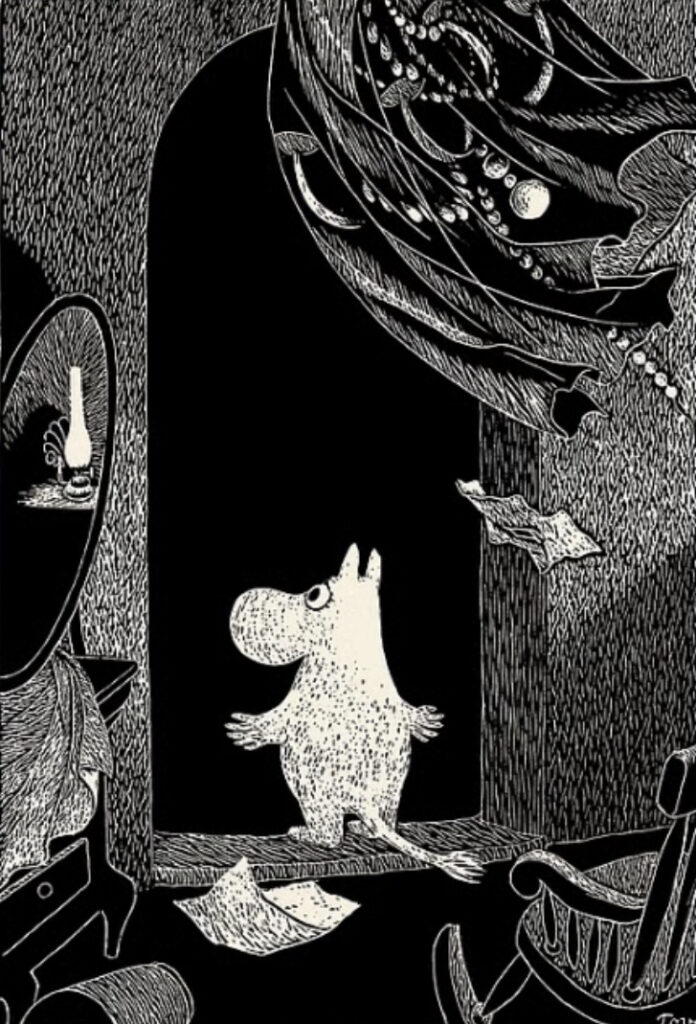
Thresholds matter profoundly in psychological terms. There is no myth, across cultures or across time, that does not grapple with the human being crossing from one stage of life into another. Every initiation begins with a threshold, and every genuine transformation demands that something familiar be left behind. When this process is avoided or becomes stalled, the resulting psychological suffering can be intense.
In my clinical work, I have encountered adults who have constrained their bodies and their lives in order to remain in a state of dependency, terrified of crossing into adulthood and the responsibilities it entails. I have worked with various people who, unable to imagine themselves capable of love or intimacy, retreat from relationship altogether. In each case, symptoms emerge not as pathology in isolation, but as attempts to manage the unknown and its perceived dangers.
From this perspective, the therapeutic encounter itself can be understood as a threshold. The task of the therapist is not to remove fear or override resistance, both are to be expected when one approaches the unknown, but to help clarify which threshold a person is standing before, and what prevents them from crossing it. Change becomes possible only when what is feared can be faced, rather than endlessly circumvented.
The therapist, in this sense, is witness, guide, and interpreter, but never rescuer. As in every threshold myth, psychological change requires a period of descent. What the Christian mystic John of the Cross called the dark night of the soul names a universal human experience: confrontation with abandonment, limitation, mortality, frustration, and rupture. It is so recognisable that its image recurs across religious and mythic traditions—Christ on the cross, crying out, “My God, why have you forsaken me?”
Long before the language of psychotherapy existed, such accounts named psychological processes that would later reappear, in secular form, within depth psychology and psychotherapy.
There is no avoiding this passage. It is not a failure of development but its condition. Wisdom and psychological growth are forged here, not elsewhere. And as J. R. R. Tolkien observed, it is only in the depths of apparent hopelessness that eucatastrophe, the sudden, unearned moment of grace, can occur.
To practise psychotherapy at a time like this is not to compete with machines, ideologies, or belief systems. It is not to promise certainty where none exists, nor to replace the structures that have been lost. Therapy cannot save civilisation, and it should not pretend to.
What it can do is quieter and more exacting. It can remain a place where reality is not smoothed over, where discomfort is not pathologised away, and where the pressure to resolve uncertainty is held rather than obeyed. It can recognise that not everything painful is a mistake to be fixed, and that some experiences only change us by being lived through.
In an age increasingly organised around optimisation, reassurance, and simulation, depth psychotherapy remains one of the few spaces where limits are acknowledged: the limits of control, of knowledge, of rescue. The therapist does not promise transformation on demand, nor intimacy without risk, nor meaning without cost.
In the age of AI, we are about to discover the essence of what it is to be human
-Matthias Desmet
As psychoanalyst Mattias Desmet has observed, the rise of artificial intelligence doesn’t just threaten the human being with replacement, but in a more life-affirming way clarifies for us what is uniquely human: our capacity to remain in relation to what is uncertain, vulnerable, and real. Machines can generate language, mirror feeling, and optimise response. They cannot cross thresholds and they cannot be changed by what happens between us.
This is why the therapeutic encounter still matters. It is one of the few remaining spaces where the human being is not treated as a system to be corrected or an experience to be smoothed over, but as someone standing before a passage that must be entered deliberately, without guarantees, only a guide.
“The passage from one cycle to another can only take place in darkness,” wrote René Guénon. Psychotherapy, at its ethical core, does not promise to illuminate that darkness prematurely. It offers something rarer: the possibility of not turning away from it, and of discovering, in time, what can only be found by crossing.
The patient enters a room unlike other rooms.
Sophie Frost is a psychotherapist based in Berlin, working online and in-person with adults and adolescents. Her work is informed by psychodynamic and attachment-based approaches, and she writes on psychotherapy, cultural change, and the psychological challenges of contemporary life at The Primrose Practice.